If you searched lute meaning, the main definition is simple:
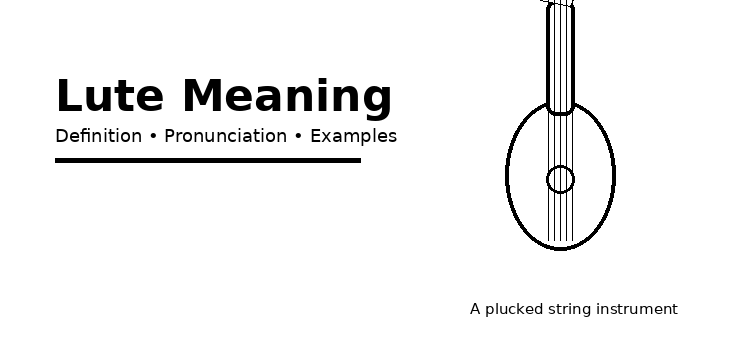
A lute is a stringed musical instrument with a rounded (bowl-shaped) back and a neck, played by plucking the strings.
In modern English, “lute” is mostly used as a noun (the instrument). It can also be used as a verb meaning to play the lute, but that verb use is uncommon today.
This guide explains the lute meaning in clear, easy language.
It includes pronunciation, real examples, quick tables, differences from similar instruments, and the most common ways the word appears in everyday writing (especially in history, music, and fantasy content).
Lute Meaning (Quick Definition Box)
Lute (noun): a plucked string instrument with a rounded back and a neck.
Lute (verb): to play the lute (rare in modern usage).
Simple meaning: a traditional instrument that looks like an older, rounded version of a guitar.
1) Lute Meaning in English (Noun)
Definition (noun)
A lute is a plucked string instrument. You play it by plucking the strings with fingers (or sometimes a pick). Most lutes have:
- a rounded back (like a bowl)
- a flat front (soundboard)
- a neck (where you press strings)
- tuning pegs at the top (or on a pegbox)
Easy example sentences
- The musician played a lute at the Renaissance fair.
- We saw an old lute in the museum.
- The movie soundtrack used a lute for a medieval sound.
2) Lute Meaning as a Verb (Less Common)
Definition (verb)
To lute means to play the lute.
This verb is grammatically correct but not very common today. In modern English, most people say “play the lute” instead of “lute.”
Examples (verb)
- He luted softly while the guests ate dinner. (correct, but old-fashioned)
- She luted for the royal court. (historical tone)
Modern alternative (more natural)
- He played the lute softly.
- She played the lute for the audience.
How to Pronounce “Lute” (US English)

Most Americans pronounce lute like:
✅ /luːt/ → sounds like “loot”
Quick pronunciation table
| Word | Sounds like | Rhymes with |
|---|---|---|
| lute | loot | boot, suit, fruit |
Tip: If you say “loot,” you can say “lute.”
What Does a Lute Look Like? (Simple Description)
People often ask about lute meaning because they see the word in books or games and don’t know what it looks like.
A lute usually looks like:
- a rounded, bowl-like back
- a shorter neck (compared to many guitars)
- a delicate, classic look
- lots of strings (sometimes more than a guitar)
It’s often pictured with:
- bards in medieval stories
- musicians in Renaissance or Baroque settings
- historical paintings and old music performances
Parts of a Lute (Useful for Understanding the Word)

Knowing the basic parts makes the instrument easier to picture.
| Part | What it is | Simple explanation |
|---|---|---|
| Body (bowl back) | rounded back section | gives the lute its shape |
| Soundboard (top) | flat wooden front | where sound comes out |
| Neck | long part you hold | where you press strings |
| Fingerboard | on top of the neck | where fingers move |
| Pegbox/pegs | tuning section | used to tune strings |
| Strings | multiple strings/courses | you pluck them to make sound |
Lute vs Guitar (Common Question)

A lot of people search lute meaning and wonder: Is it just an old guitar?
It’s similar, but not the same.
| Feature | Lute | Guitar |
|---|---|---|
| Back/body | rounded / bowl-shaped | mostly flat back |
| Strings | often more; sometimes paired | usually 6 single strings |
| Sound | softer, delicate | louder, fuller |
| Common era | medieval/Renaissance | modern & widely used |
| Typical use | early music, historical sound | many modern genres |
Simple explanation:
A lute is an older-style plucked instrument with a rounded back and a softer tone.
Lute vs Oud (Another Common Confusion)
You may also hear people say “oud” when talking about lute-like instruments. The oud is related but not identical.

| Feature | Lute | Oud |
|---|---|---|
| Cultural origin | mostly European traditions | Middle Eastern / North African traditions |
| Frets | often has frets | usually fretless |
| Tone | bright, delicate | warm, deep |
Easy takeaway:
An oud is often called a “lute-family” instrument, but it has its own identity and style.
Types of Lutes
The word “lute” can refer to different members of the lute family. You don’t need to memorize all of them, but knowing the main ones helps.
| Type | Where you’ll hear it | Quick note |
|---|---|---|
| Renaissance lute | early European music | classic lute shape |
| Baroque lute | Baroque-era music | often more strings |
| Theorbo | early music + basso continuo | very long neck |
| Archlute | early music | between lute and theorbo |
| Oud (lute-family) | Middle Eastern music | fretless, warm tone |
Important: In everyday English, most people just say “lute” unless they are speaking about a specific historical type.
How a Lute Is Played (Simple Explanation)
A lute is played by:
- holding it like a guitar (usually sitting down)
- using fingers to pluck strings (fingerstyle)
- pressing strings on the fingerboard to change notes
- sometimes playing chords, sometimes melodies
Easy sentence examples
- He plucked the lute strings softly.
- She played a melody on the lute.
- The lute sounded gentle and calm.
What Does a Lute Sound Like?
A lute often sounds:
- soft
- warm
- gentle
- delicate
- “old-world”
It’s used in films and games to create:
- medieval vibes
- old Europe / castle scenes
- fantasy tavern music
- emotional, quiet moments
Common descriptions you’ll see
- “soft lute music”
- “a lute melody”
- “the gentle sound of a lute”
- “a lute player in the corner”
Where the Word “Lute” Is Most Common (Real Use)
If you want to understand lute meaning, it helps to know where you’ll see the word.
1) History and classical music
- Renaissance music articles
- museum displays
- historical documentaries
- music class lessons
2) Fantasy / medieval entertainment
- novels (bards and taverns)
- video games (RPGs)
- Dungeons & Dragons style content
- fantasy movies and series
3) Poetry and older writing
- romantic scenes
- courtly settings
- old English literature references
Lute Meaning in Stories (Why Bards Always Have One)
In modern storytelling, a lute is often linked to a bard (a musician/storyteller). That’s why the word is popular in fantasy culture.
Examples (story style)
- The bard tuned his lute before the song began.
- She carried her lute across the kingdom.
- A quiet lute melody filled the tavern.
These sentences show the common way “lute” appears in fiction.
Example Sentences (More Real, More Variety)
Below are many sentence examples so you can copy, understand, and use the word naturally.
A) Simple everyday English
- The lute is a traditional musical instrument.
- I saw a lute at the music museum.
- He learned lute music in college.
B) Music and performance
- The performer played a lute piece from the Renaissance era.
- The lute player sat quietly on stage.
- A lute can play both chords and melodies.
C) Fantasy / medieval vibe
- The bard strummed his lute by the fire.
- A lute song made the crowd silent.
- Her lute playing sounded peaceful and ancient.
D) Verb form (rare, but correct)
- He luted for hours without stopping.
- They luted and sang during the celebration.
✅ Note: You can use it, but “played the lute” will sound more modern and natural.
Common Collocations (Words That Commonly Come With “Lute”)
These combinations show how the word is used naturally.
| Common phrase | Meaning |
|---|---|
| play the lute | perform music on it |
| lute music | music written for lute |
| lute player | person who plays it |
| lute melody | tune played on lute |
| lute strings | the strings of the instrument |
| lute song | a song performed with lute |
Example:
- The lute player performed a beautiful lute melody.
“Lute” Synonyms and Related Words (What to Use Instead)
There isn’t a perfect synonym because “lute” is specific, but here are related words.
| Category | Related words |
|---|---|
| Similar instruments | guitar, mandolin, oud, lyre |
| Music actions | pluck, strum, tune, perform |
| Roles | musician, bard, minstrel |
| Lute family terms | theorbo, archlute |
Important note: “Guitar” is not a synonym. It’s just the closest modern comparison.
Common Mistakes With “Lute” (Fix These)
Mistake 1: Pronouncing it wrong
❌ “lut” (like “cut”)
✅ “loot”
Mistake 2: Calling any old instrument a lute
A lute usually has a rounded back and is plucked. Not every old string instrument is a lute.
Mistake 3: Overusing the verb “to lute”
It’s correct, but modern English usually prefers:
✅ “play the lute”
instead of
⚠️ “lute”
Quick Practice (So You Remember the Meaning)
Choose the best sentence:
- He played the lute at the festival. ✅ (best, natural)
- He luted at the festival. ✅ (correct, but uncommon)
- He lute at the festival. ❌ (wrong grammar)
Best modern choice: played the lute
FAQs (lute meaning)
Lute meaning: a plucked string instrument with a rounded back and a neck. It can also mean “to play a lute.”
No. A lute usually has a rounded back, often more strings, and a softer sound. A guitar is flatter and more modern.
Most Americans pronounce lute like “loot.”
In fantasy, a lute is commonly the instrument a bard uses to sing and perform.
As a verb, lute means to play the lute, but it’s not commonly used in everyday modern English.
Final Summary
- Lute meaning (noun): a plucked string instrument with a rounded back
- Lute meaning (verb): to play the lute (rare)
- Pronunciation (US): “loot”
- Common in: history, classical music, Renaissance, and fantasy stories

About Grayson
Grayson is a professional English language teacher and the founder of WordEncyclo. With years of teaching experience, he specializes in vocabulary development, etymology, and word usage. His mission is to make English words and their meanings accessible to learners at all levels through clear, accurate, and well-researched content.